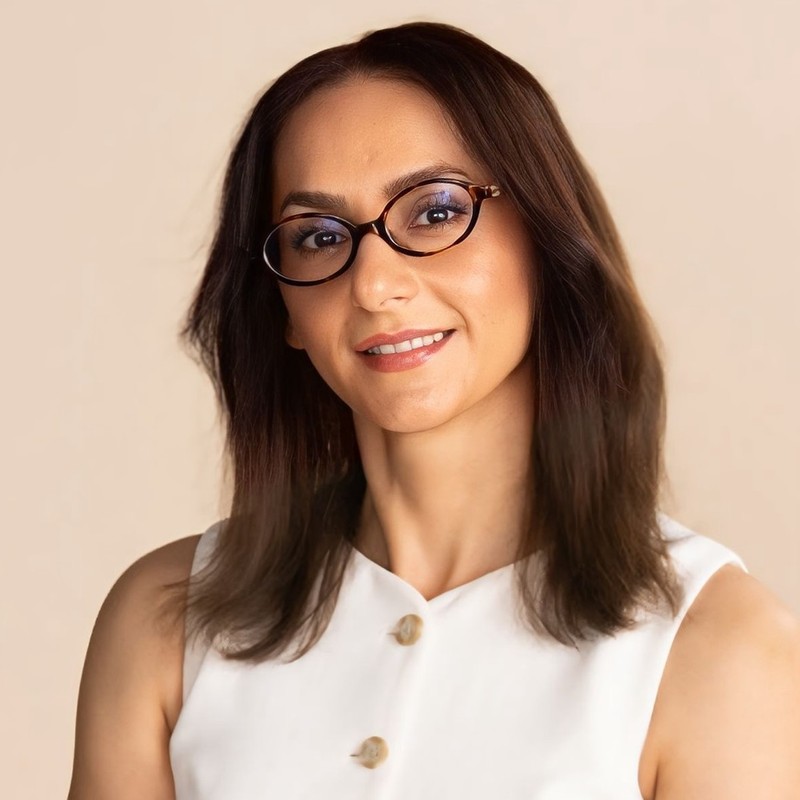
Fateme (Fatima) Nateghi
Postdoc in the HealthRex Lab at Stanford with Dr. Jonathan H. Chen, building LLMs and evaluation frameworks that hold up in real clinical settings.
I'm also a Data Science Lead in the ARISE Network, advancing open benchmarks and real-world evaluation of clinical AI systems. Before Stanford, I completed my PhD at KU Leuven, Belgium, in Machine Learning with a focus on applications in medicine, developing semi-supervised learning methods for time-to-event prediction in partially labeled clinical data.
Research

NOHARM
A large-scale benchmark for evaluating the clinical safety of LLMs using real physician-to-physician consultation cases, the foundation of MAST (Medical AI Superintelligence Test).

ARMD-Predict
A patient-specific antibiogram at the moment a culture is ordered: from information recorded before the order, it estimates the probability that a recovered organism will be susceptible to each candidate antibiotic. Trained on 7.4 million culture–antibiotic results from four U.S. health systems.

SAGE
A retrieval-augmented system that helps primary care providers route specialty consultations and surfaces guideline-aligned recommendations during real clinical workflows.

Bup-Nal Attrition
Combining structured EHR data with LLM-extracted features from clinical notes to predict 6-month retention in buprenorphine-naloxone therapy, with an open web tool for risk stratification.

Semi-supervised survival analysis
Methods for time-to-event prediction when most labels are censored, improving outcome prediction without requiring fully observed follow-up.
Selected publications
- D. Wu*, F. Nateghi Haredasht*, et al. First, Do NOHARM: Towards Clinically Safe Large Language Models. arXiv, 2026.[arxiv]
- F. Nateghi Haredasht*, N. P. Marshall*, W. Chen, et al. ARMD-Predict: multi-site machine learning to predict antibiotic resistance before culture results. Preprint, 2026.[project][code][web app]
- F. Nateghi Haredasht, I. Lopez, S. Tate, et al. Predicting treatment retention in medication for opioid use disorder: a machine learning approach using NLP and LLM-derived clinical features. JAMIA, 2025.[paper][web app]
- W. Chen, F. Nateghi Haredasht, K.C. Black, F. Grolleau, E. Alsentzer, J.H. Chen, et al. Retrieval-Augmented Guardrails for AI-Drafted Patient-Portal Messages: Error Taxonomy Construction and Large-Scale Evaluation. arXiv, 2025.[arxiv]
- DJH Wu*, F. Nateghi Haredasht*, D Wu, V Ravi, LG McCoy, Y Weng, K Chopra, JH Chen. Automated Evaluation of Large Language Model Response Concordance with Human Specialist Responses on Physician-to-Physician eConsult Cases. medRxiv, 2025.[paper]
- LG McCoy*, F. Nateghi Haredasht*, K Chopra, D Wu, DJH Wu, A Conteh, JH Chen. Asking the Right Questions: Benchmarking Large Language Models in the Development of Clinical Consultation Templates. arXiv, 2025.[arxiv]
- S. Bedi, ..., F. Nateghi Haredasht, J.H. Chen, N.H. Shah, et al. MedHELM: Holistic Evaluation of Large Language Models for Medical Tasks. arXiv, 2025.[arxiv][benchmark]
- I. Lopez, A. Swaminathan, K. Vedula, S. Narayanan, F. Nateghi Haredasht. Clinical Entity-Augmented Retrieval for Clinical Information Extraction (CLEAR). npj Digital Medicine, 2025.[paper][code]
- I. Lopez, F. Nateghi Haredasht, K. Caoili, J.H. Chen, A. Chaudhari. Embedding-Driven Diversity Sampling to Improve Few-Shot Synthetic Data Generation. arXiv, 2025.[arxiv]
- P. Ashtari, S. Noei, F. Nateghi Haredasht, J.H. Chen, G. Jurman, A. Pizurica. Deconver: A Deconvolutional Network for Medical Image Segmentation. arXiv, 2025.[arxiv][code]
- F. Nateghi Haredasht, S. Fouladvand, S. Tate, et al. A Multi-Site Machine Learning Model for Predicting Treatment Retention in Opioid Use Disorder. Addiction, 2024.[paper][code]
- P. Ashtari, P. Behmandpoor, F. Nateghi Haredasht, J.H. Chen, P. Patrinos. Quantization-Free Lossy Image Compression Using Integer Matrix Factorization. arXiv, 2024.[arxiv][code]
- F. Nateghi Haredasht, L. Viaene, H. Pottel, W. De Corte, C. Vens. Predicting Outcomes of Acute Kidney Injury Using Machine Learning. Scientific Reports, 2023.[paper]
- F. Nateghi Haredasht, C. Vens. Predicting Survival Outcomes in the Presence of Unlabeled Data. Machine Learning, 2022.[paper][code]
- P. Ashtari, F. Nateghi Haredasht, H. Beigy. Supervised Fuzzy Partitioning. Pattern Recognition, 2020.[paper]
Selected talks
- Dec 2025Toward Trustworthy Clinical AI: Building Safe & Context-Aware Systems for Healthcare · Itec (KU Leuven & imec), invited[slides]
- Nov 2025Right Patient, Right Specialist, Right Time: AI Routing of eConsults Using Language Models · AMIA 2025, Atlanta[slides]
- Mar 2025Medication for Opioid Use Disorder: Predictability of Retention vs. Attrition · CTN Steering Committee, invited[slides]
- Nov 2024Enhancing Antibiotic Stewardship: A Machine Learning Approach to Predicting Antibiotic Resistance in Inpatient Care · AMIA 2024, San Francisco[slides]
- Nov 2024Predicting Treatment Retention in Buprenorphine-Naloxone Therapy Using Multi-Site EHR Data · AMIA 2024, San Francisco[slides]
Roles & leadership
- nowData Science Lead, ARISE Network · open benchmarks and real-world evaluation of clinical AI
- 2026Emerson Consequential Scholar, Stanford Technology Ventures Program · Feb–Jun 2026
- 2025–2027Co-organizer, AI & ML in Clinical Medicine session, PSB · 2025, 2026, 2027
- 2025–2026Contributor, Stanford HAI AI Index Report ·[2026][2025]
- 2024, 2026Program Committee, ECML PKDD
- 2024Lead postdoc, Stanford Bio-X Seed Grant · Enhancing Specialty Care with Digital Medical Consultations: A Retrieval-Augmented Language Model Approach
Outside the lab


When I'm not working on clinical AI, I'm usually traveling, hiking, or behind a camera.